
The Perfect Present: A Study in Stylized Filmmaking in Unreal Engine
Summary
Project: "The Perfect Present" Visual Adaptation
The Challenge: Adapting an existing audio-only short story into a visually compelling, cinematic experience on a tight indie budget.
The Solution: Utilizing Unreal Engine 5.6 and MetaHumans to create a painterly, stylized "frozen-in-time" world, bypassing traditional high-cost animation while maintaining high emotional impact.
My Role
Art direction
3D Environment Design
Character customization (MetaHumans)
Post-production & stylized color grading
In an era of hyper-fast content and "AI slop," the goal was to create a visual adaptation of Andy Wardlaw’s (LampLight Radio Play) short story that felt intentional, artisanal, and emotionally resonant. We needed a high-end cinematic aesthetic that honored the narrative's depth without the prohibitive costs of traditional full-scale character animation.
The Creative Strategy
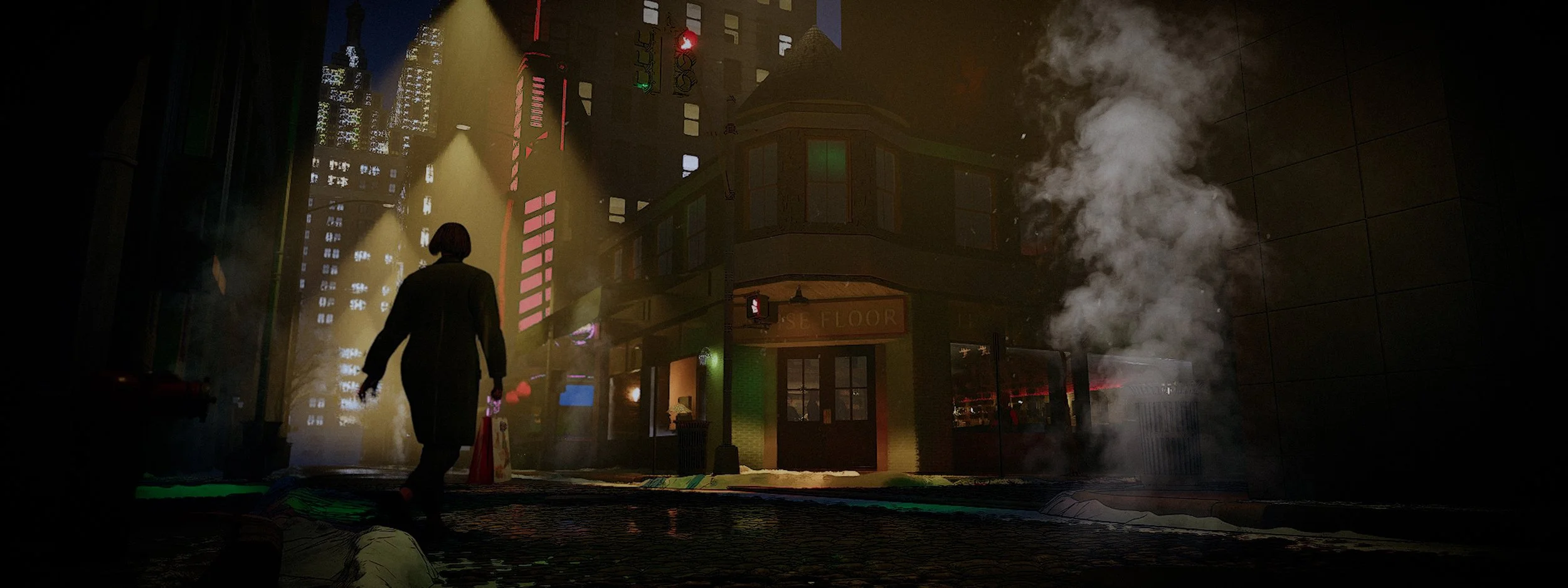
Inspired by the 1962 masterpiece La Jetée, we elected to "freeze" the story world. By focusing on evocative still frames, we allowed the environment, prop symbolism, and nuanced body language to carry the narrative weight. This approach transformed a technical constraint into a unique, high-concept visual identity.
The Solution: Virtual Production & Digital Artistry
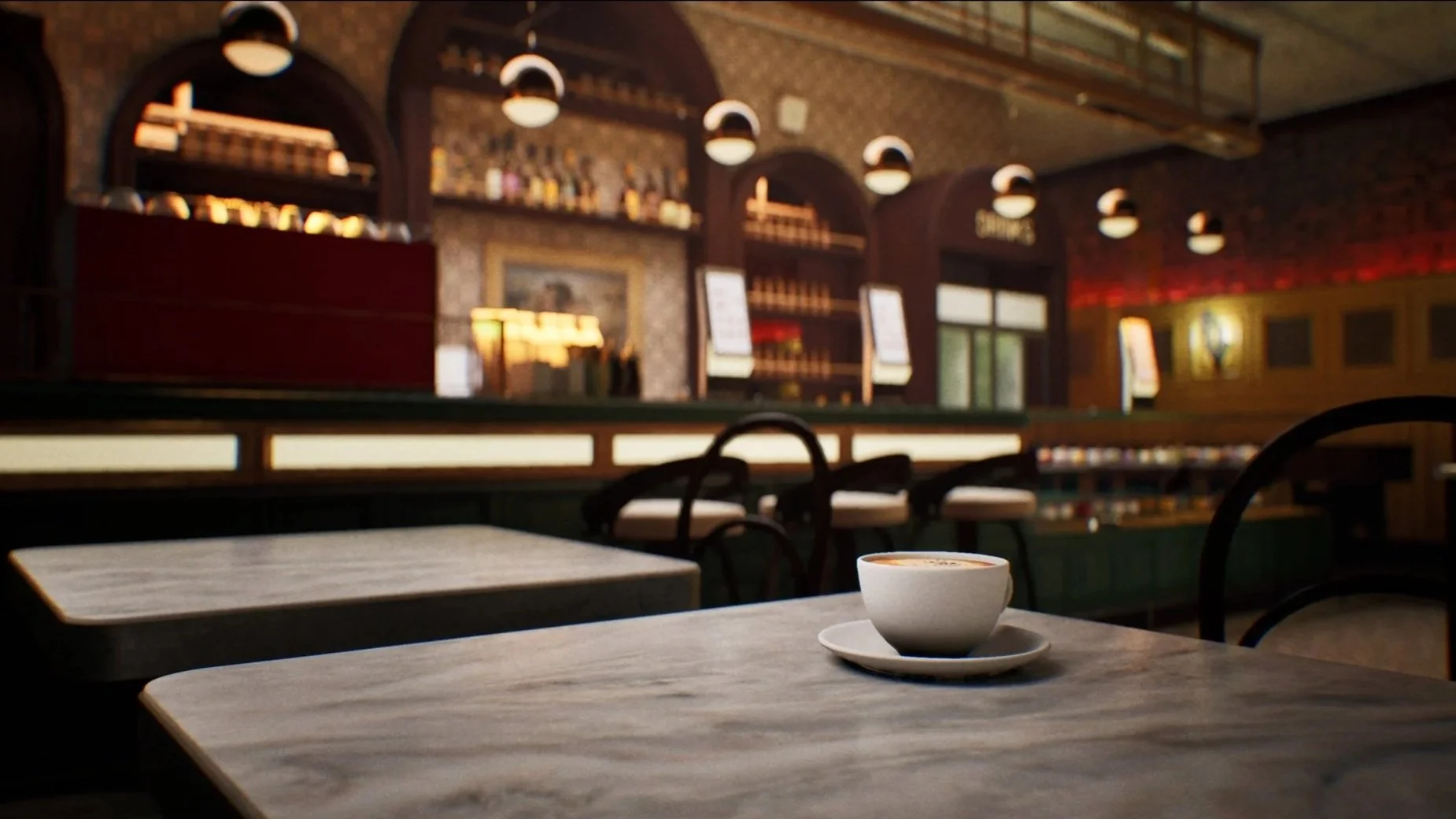
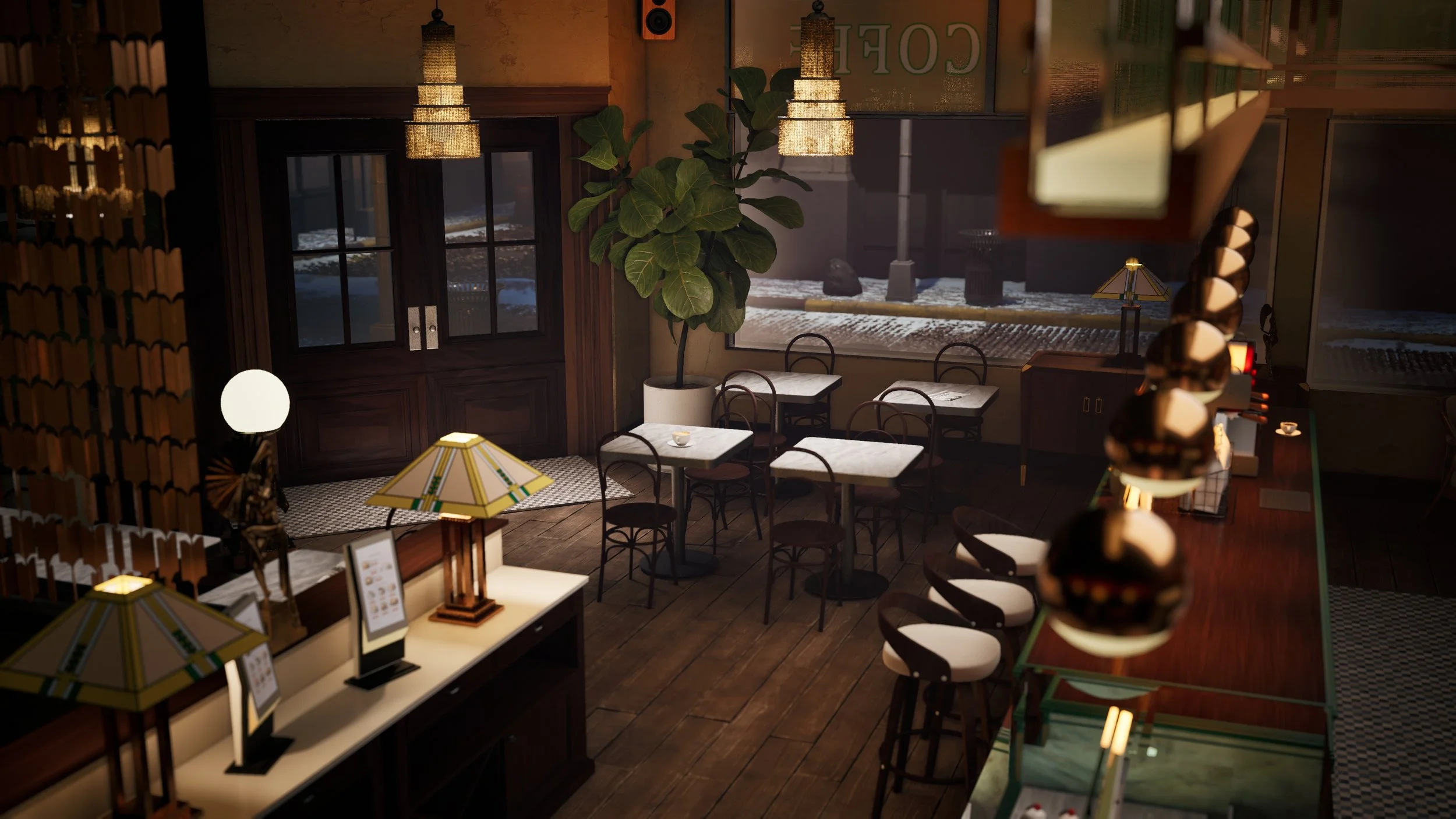
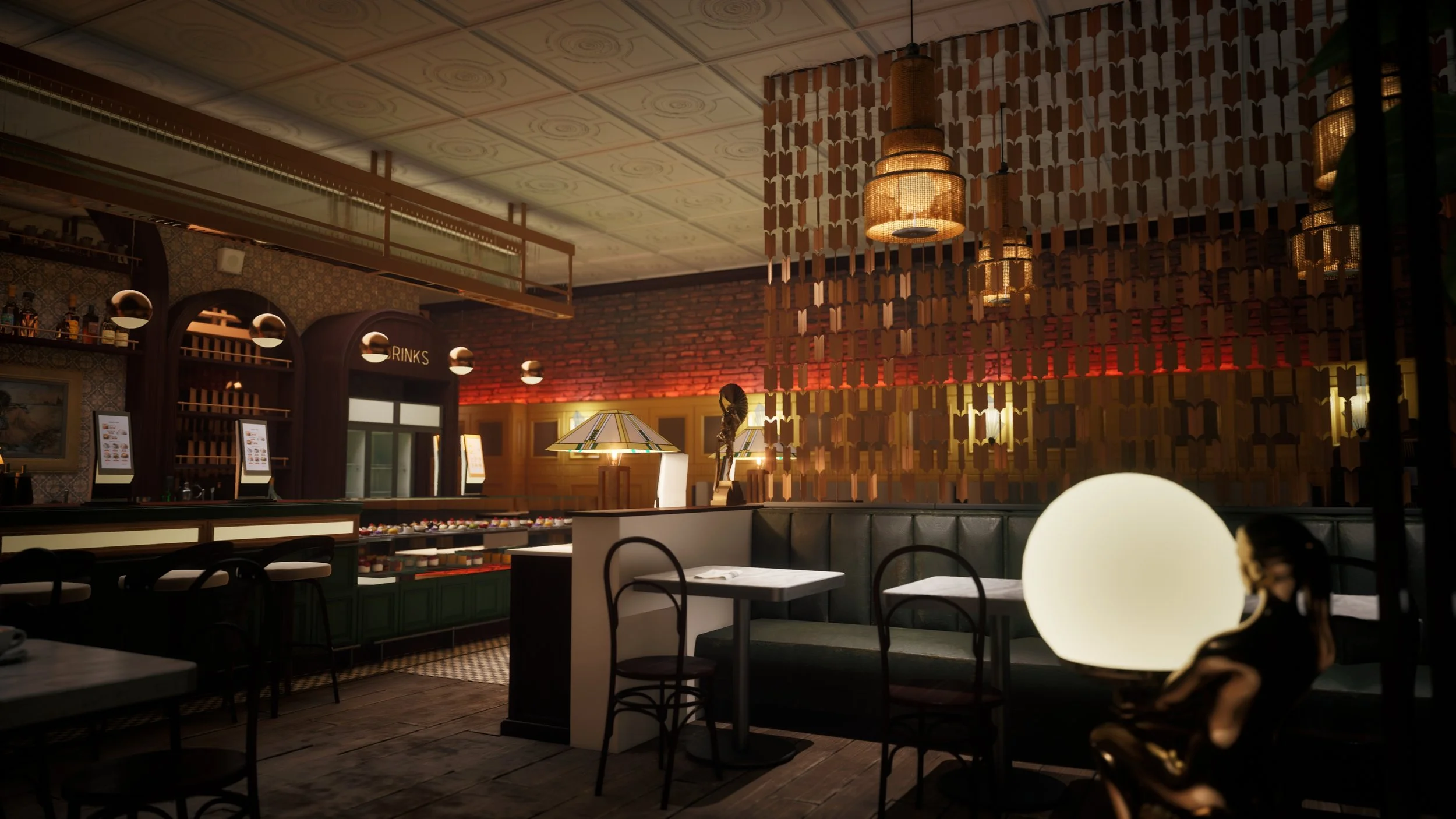
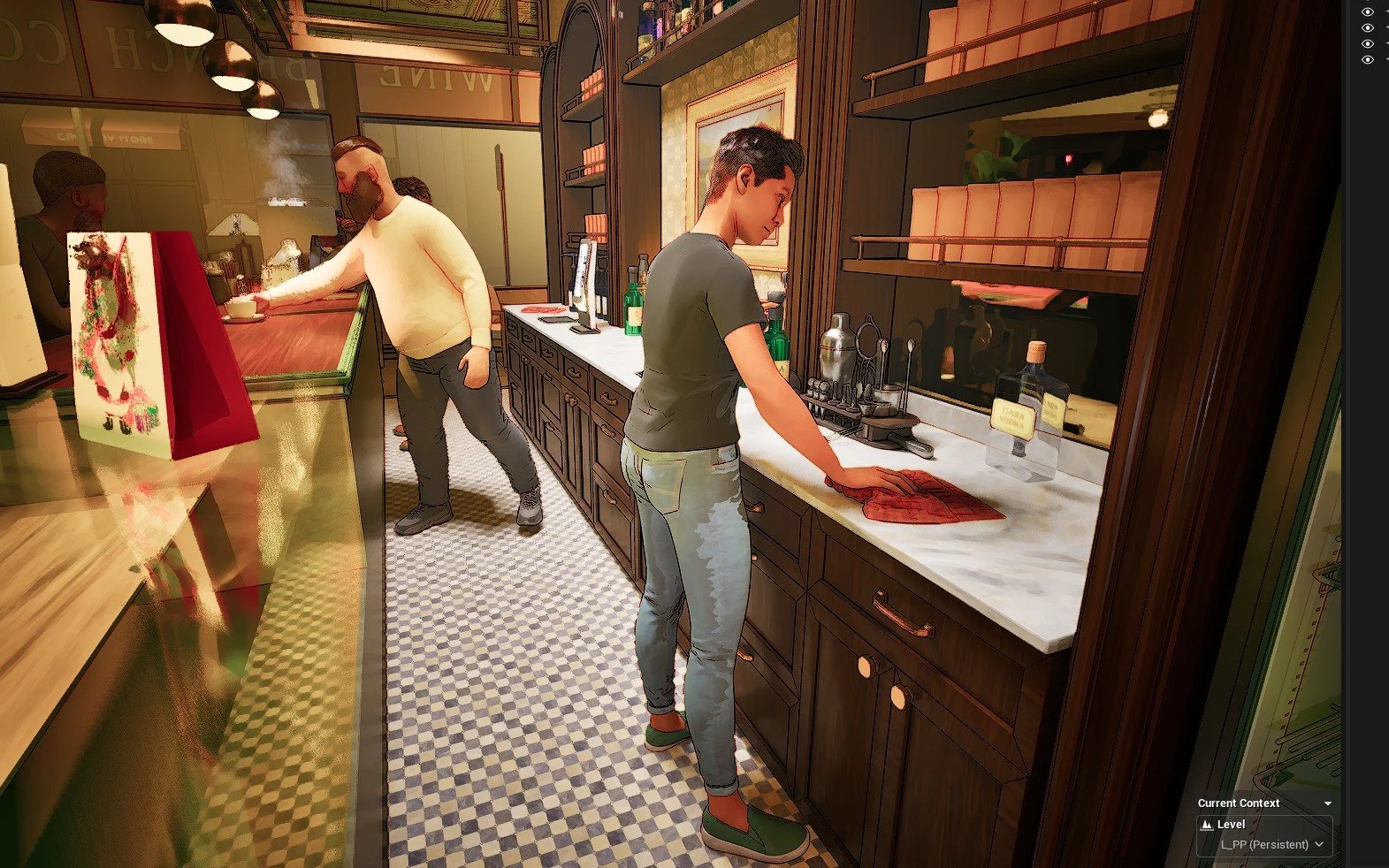
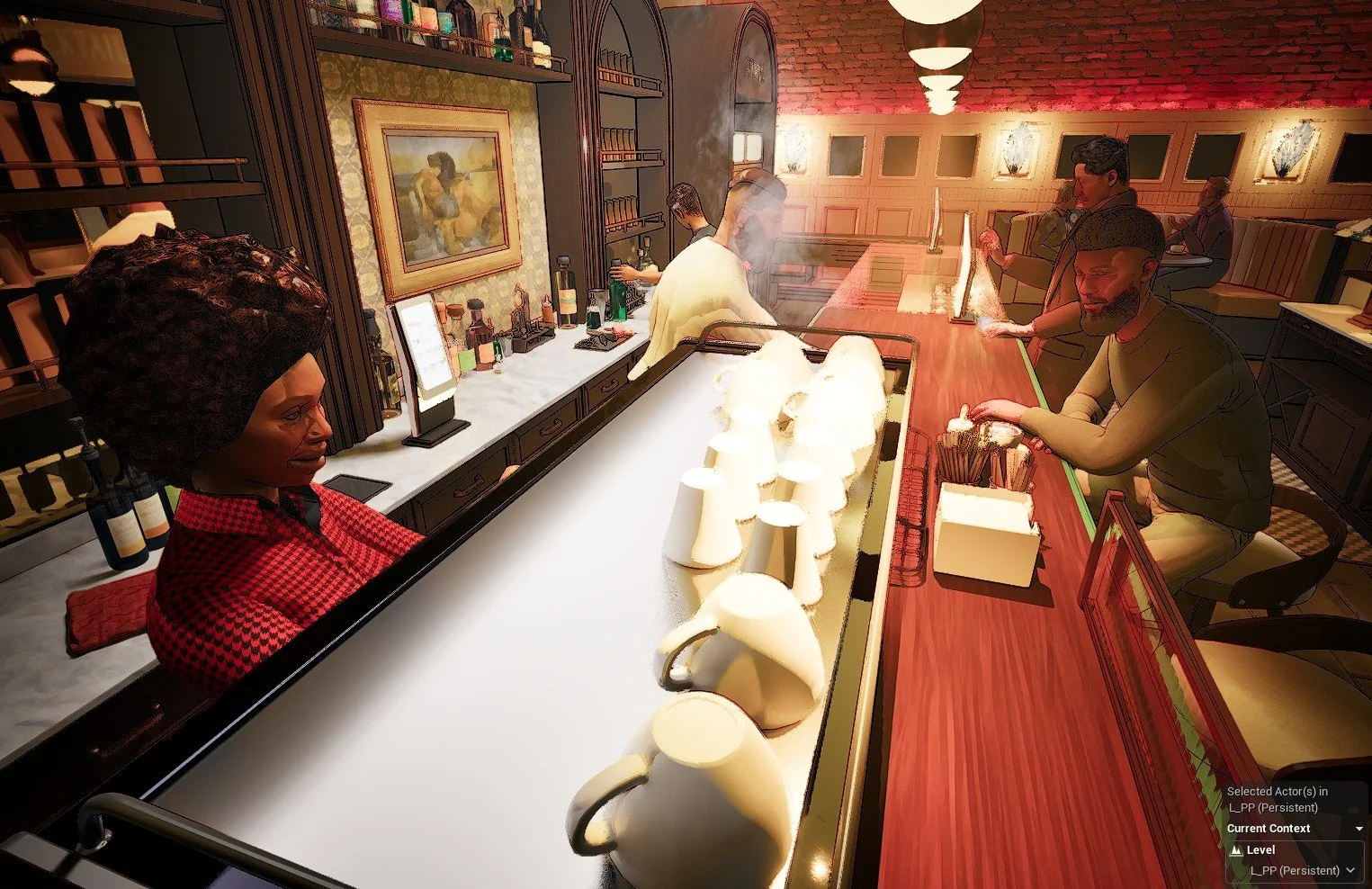
Immersive Environments: The "Noise Floor" cafe was built from the ground up in Unreal Engine, allowing for total control over lighting, set dressing, and "camera" blocking.
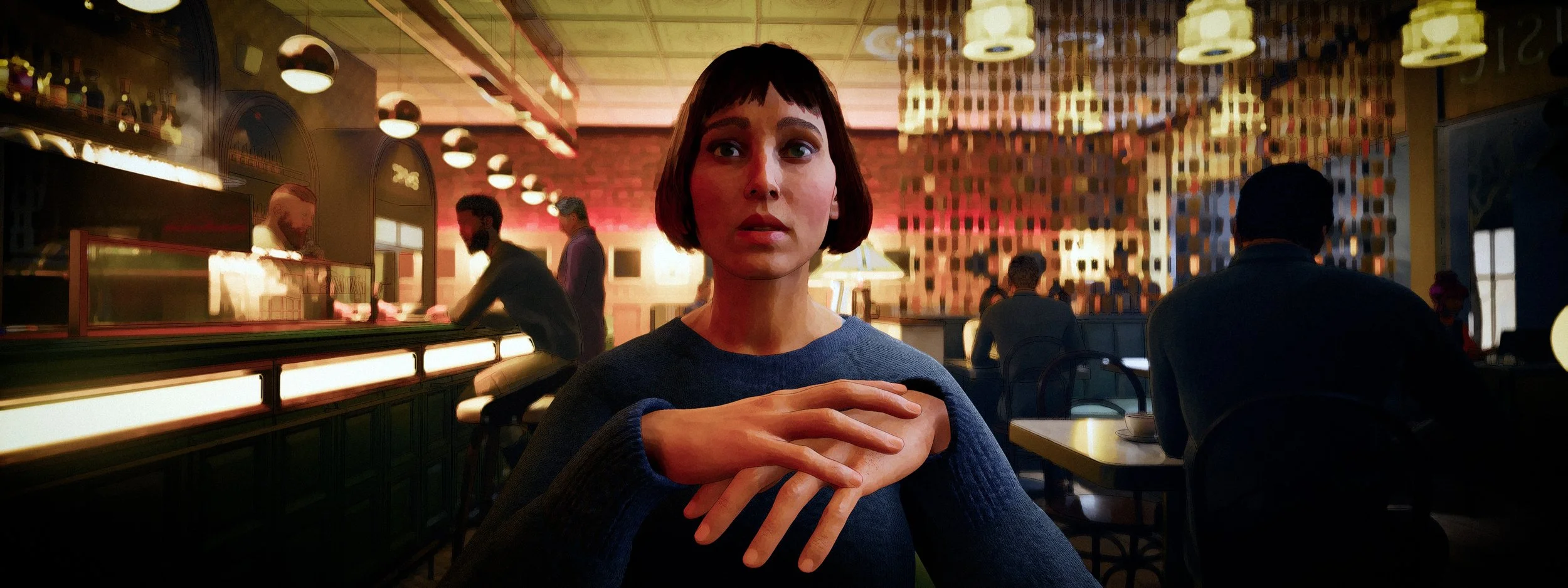
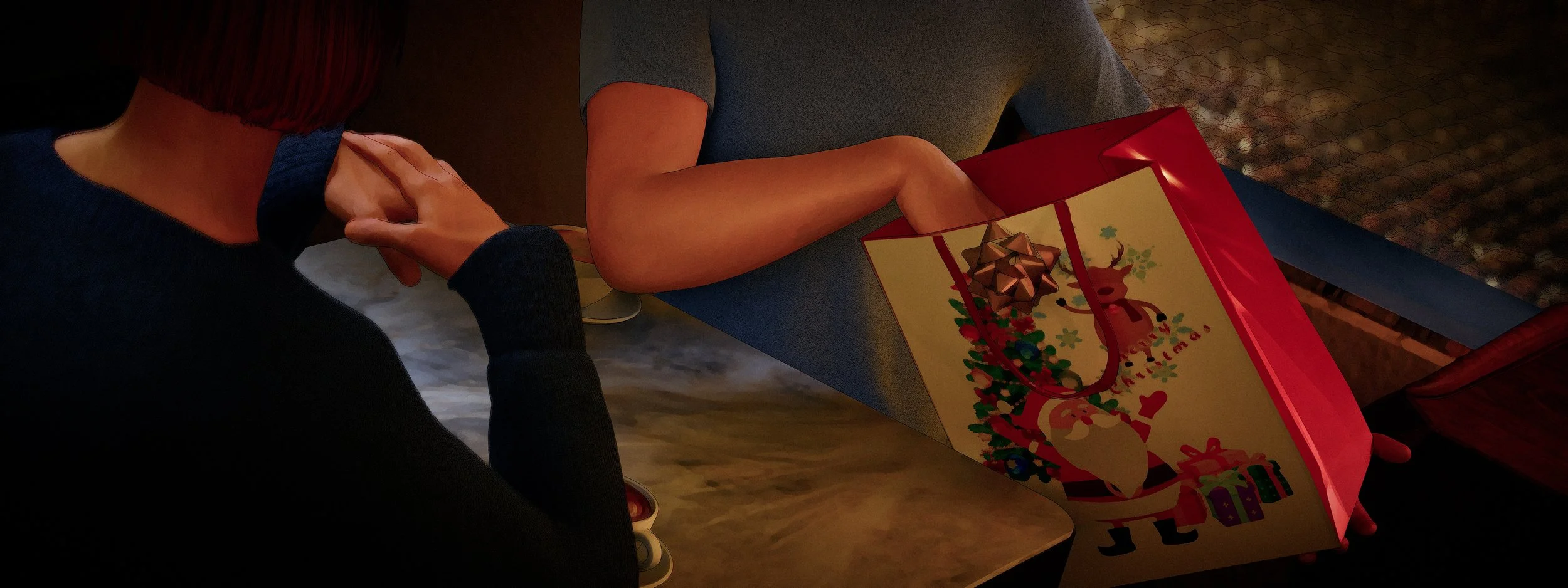
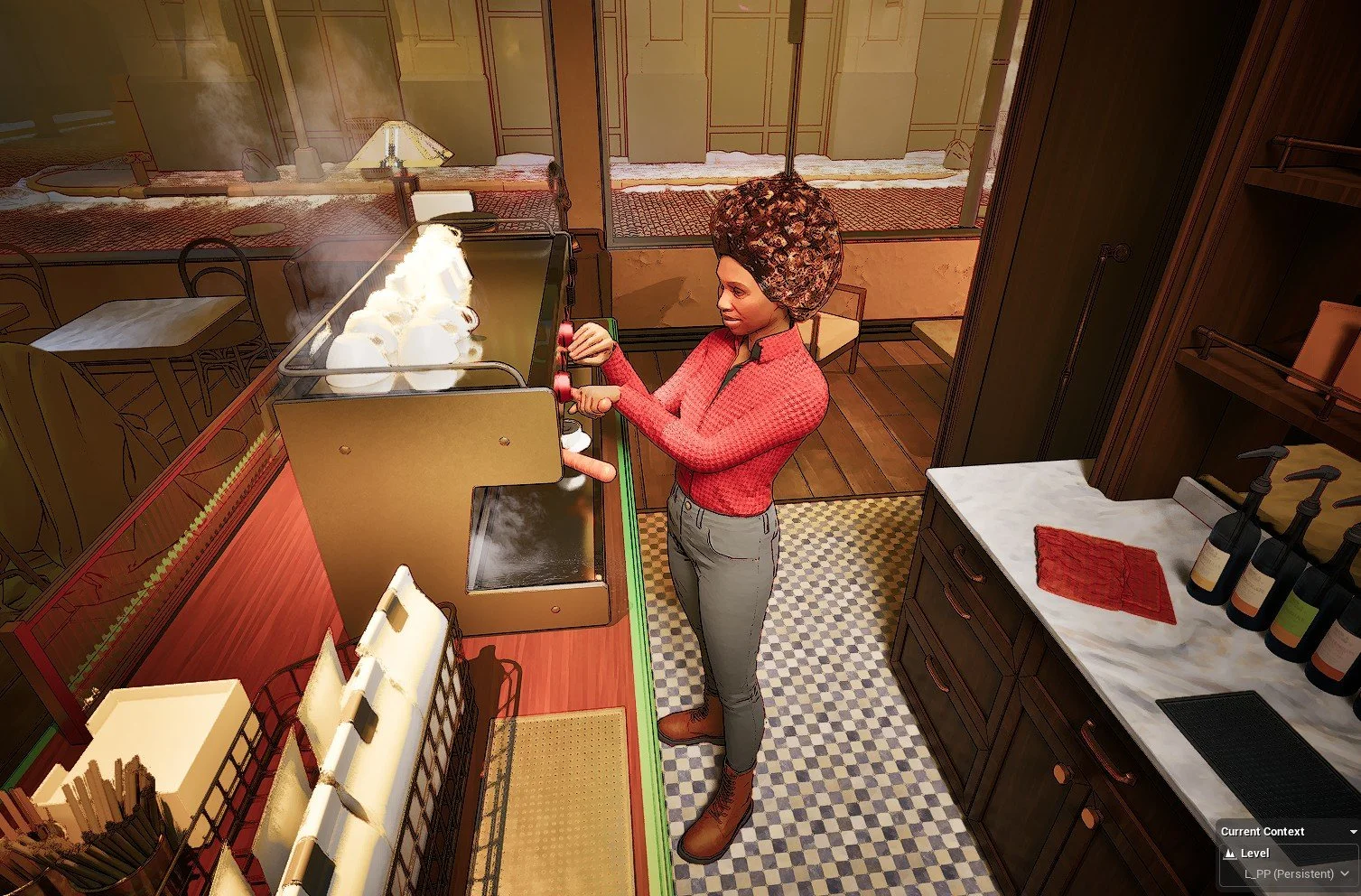
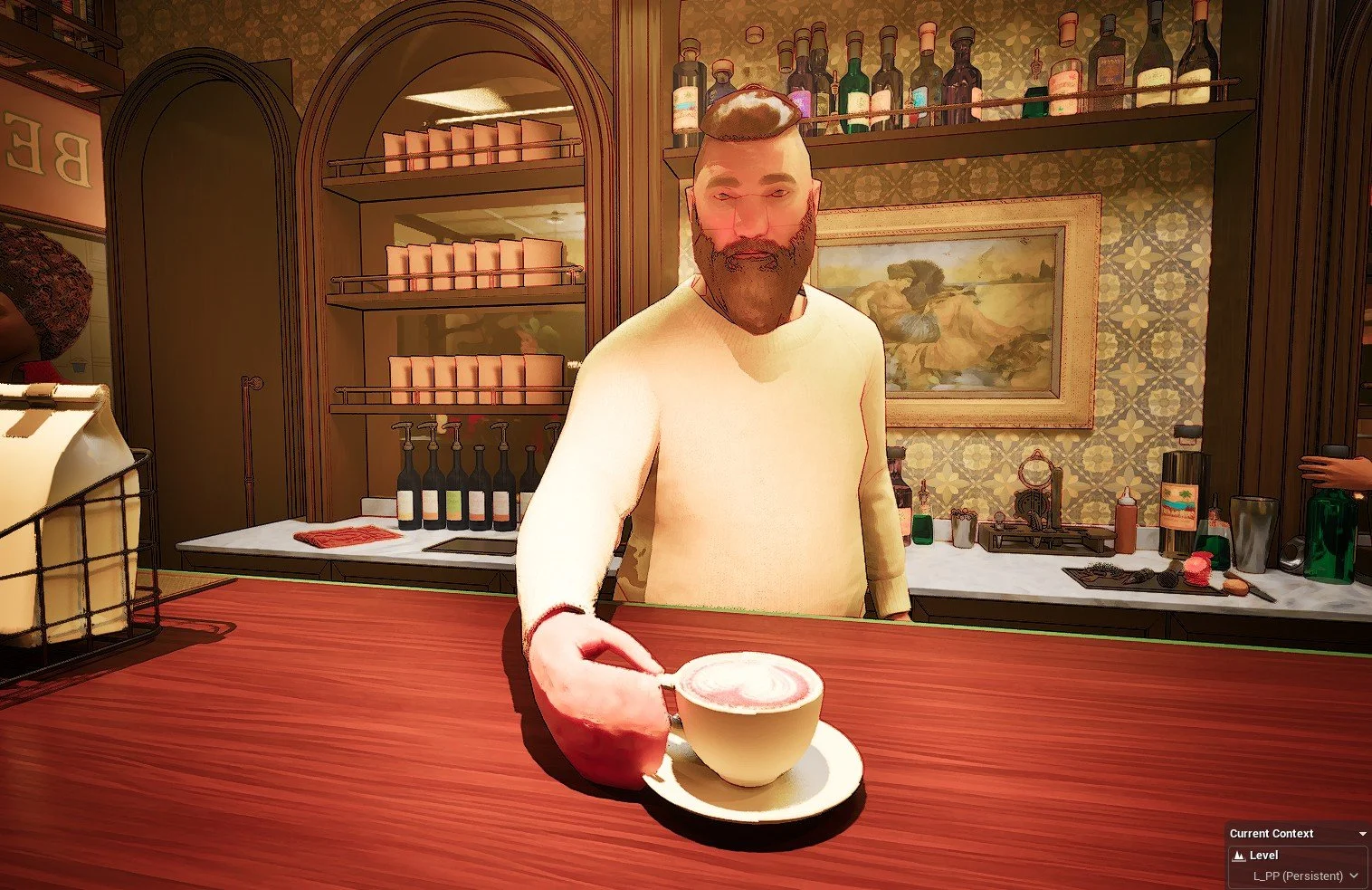
Stylized Fidelity: To break the "uncanny valley" often found in 3D characters, we implemented a custom Kuwahara post-process filter. This achieved a painterly, illustrative look that enhanced the scene’s jewel-toned palette while maintaining the emotional clarity of the performances.
Status
Currently in the 2026 film festival circuit. Below is a technical breakdown of the virtual production workflow used to bring this vision to life.
Phase 1: Visual Development & Narrative Strategy
The Aesthetic: Retro-Futurism Meets Art Deco
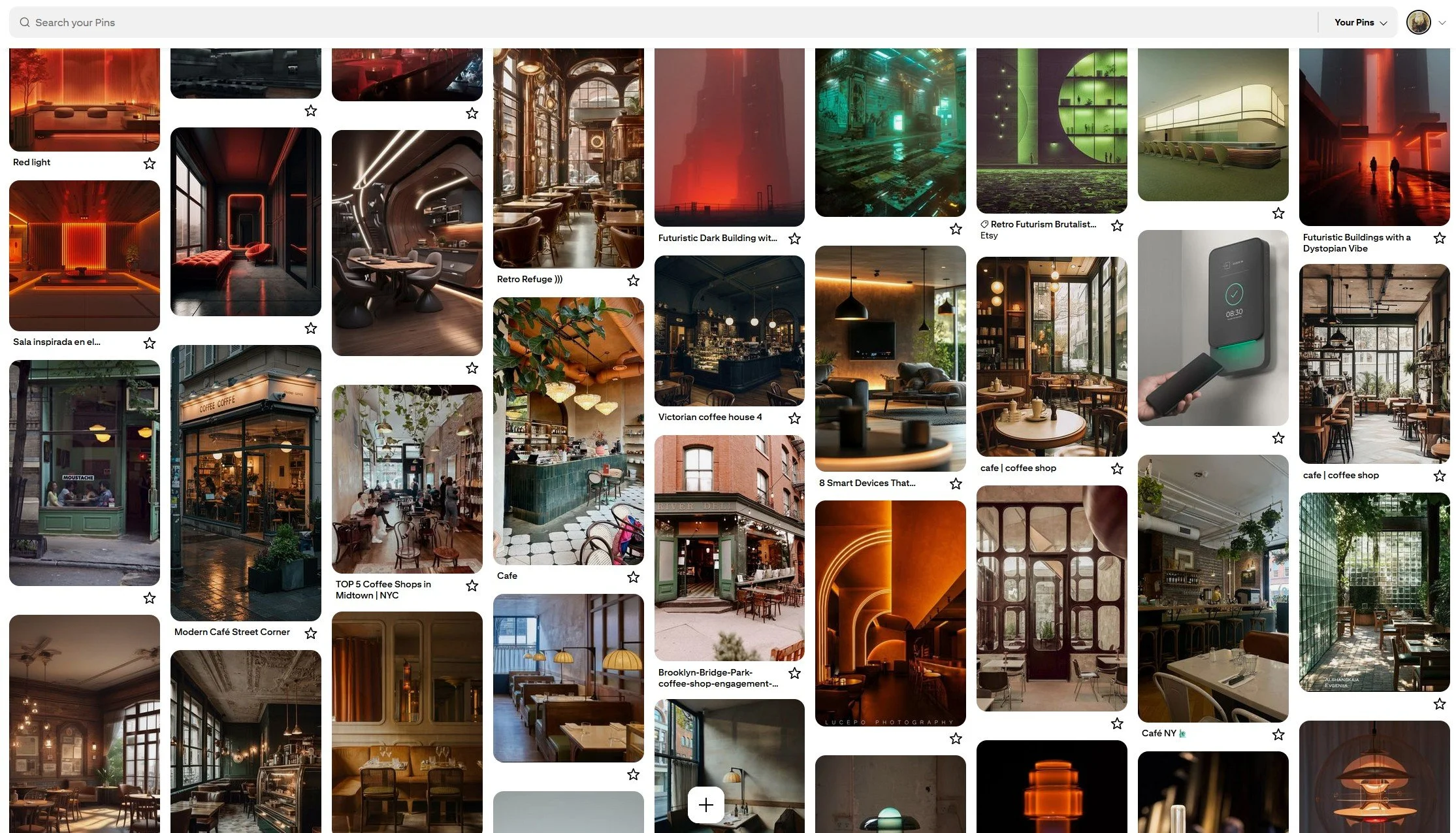
To establish a "future-adjacent" setting, I developed an aesthetic pairing of Art Deco-inspired architecture with subtle cyberpunk visual elements. By utilizing a high-contrast mood board of exposed brick, dark wood, and brass accented by neon jewel tones, we transformed the "Noise Floor" cafe into a central character. This intentional environment design provides a grounded, "lived-in" New England atmosphere that stands in stark contrast to the story’s ethereal, time-bending themes.
Pinterest was the logical choice for creating a mood board for the short. There, we were able to see the aesthetic pairing of an art-deco-inspired cafe located in a New England style city, and lite cyberpunk visual elements to indicate that this is a story that takes place in the future.
The marriage of exposed brick, dark wood, brass, jewel tones, and colored lights felt right.
Symbolism Over Spectacle
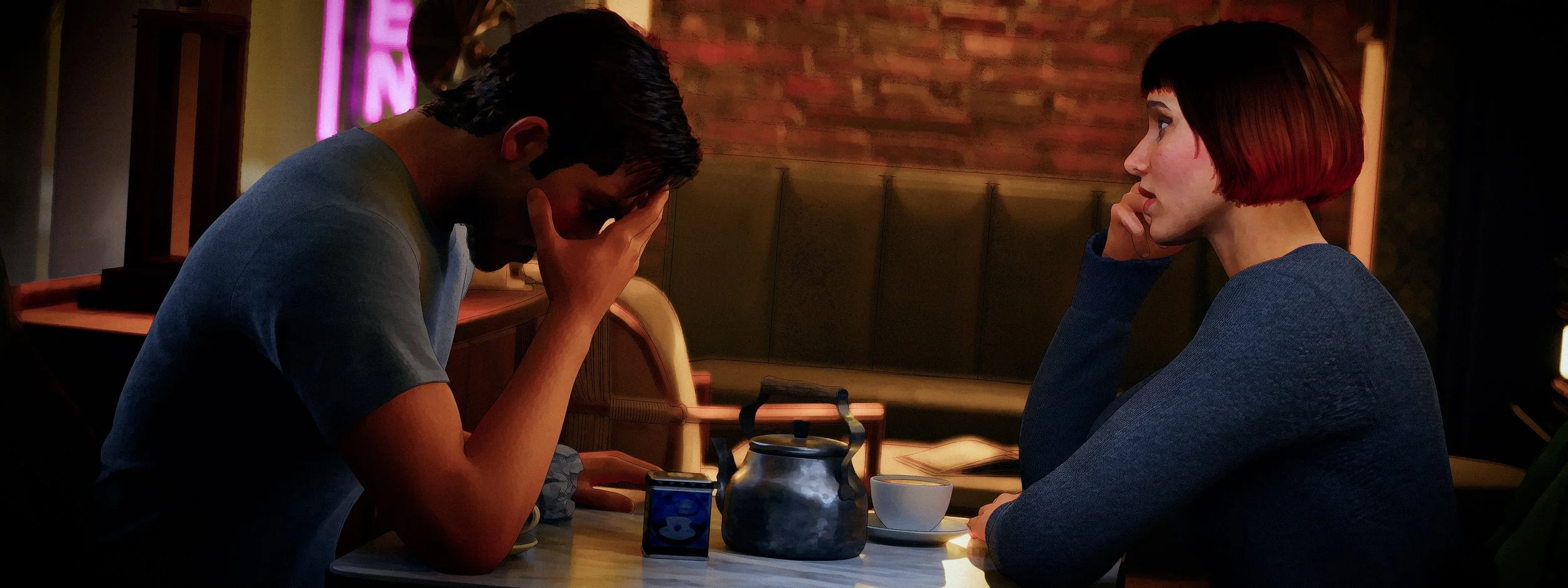
Moving away from standard "talking head" cinematography, I designed a storytelling framework centered on symbolic props and environmental detail. By focusing the camera on key story objects rather than a traditional two-way conversation, we heightened the emotional stakes and forced the audience to engage with the world’s texture. This "frozen-frame" strategy allowed the vocal performances to breathe while ensuring every visual element had a narrative purpose.
Virtual Environment & Art Direction
Phase 2: Full-Stack Asset Production & World Building
Multi-Zone Environment Design
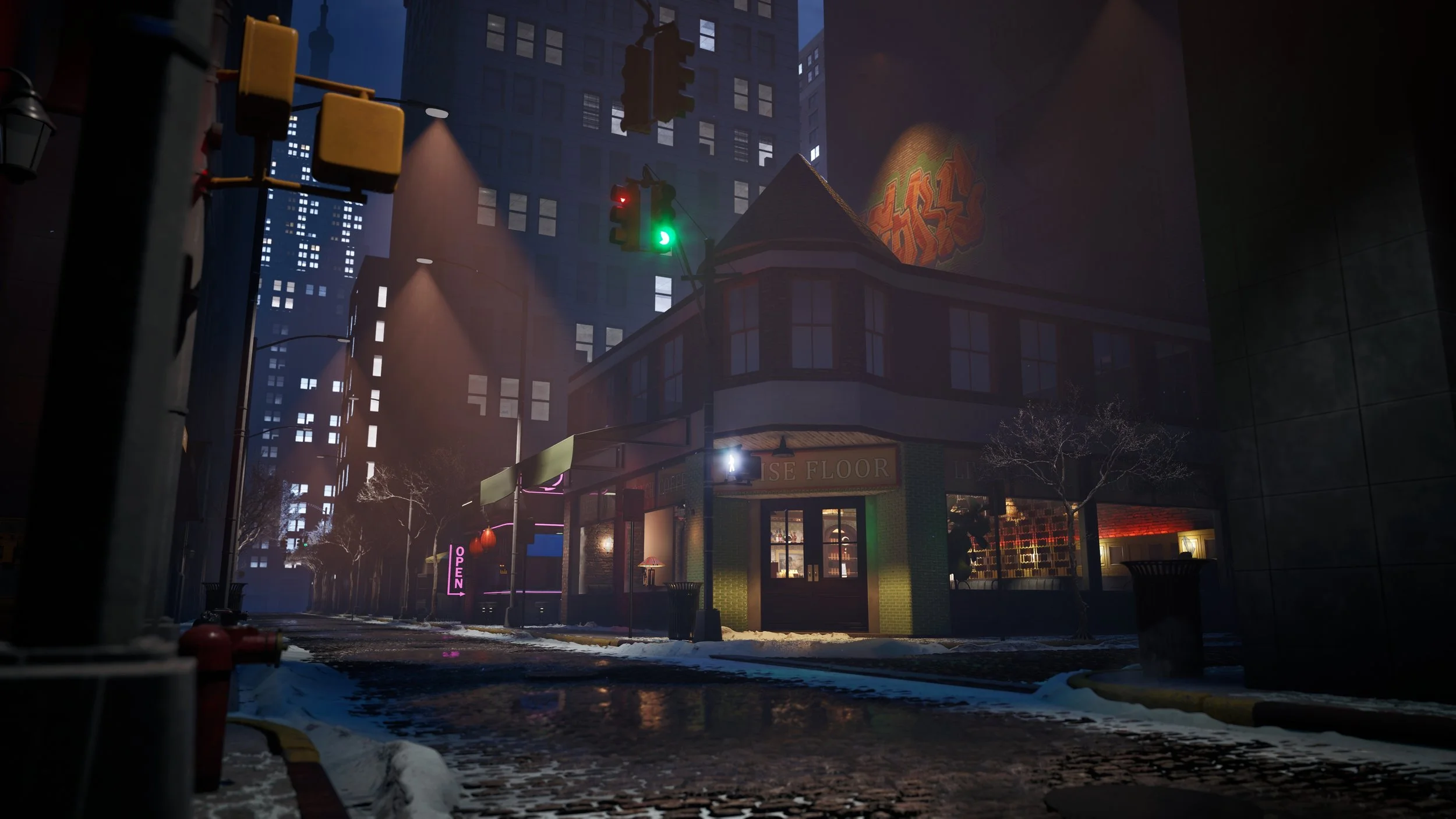
I engineered a three-tier environment—interior, exterior, and cityscape—prioritizing high-fidelity detail in the "Noise Floor" cafe while maintaining a "sleepy urban" atmosphere for the surrounding neighborhood. To ensure a grounded, lived-in aesthetic, I utilized Blender for custom architectural modeling and Substance Painter for photorealistic texturing of the building’s hero assets.
Narrative Set Dressing & Detail
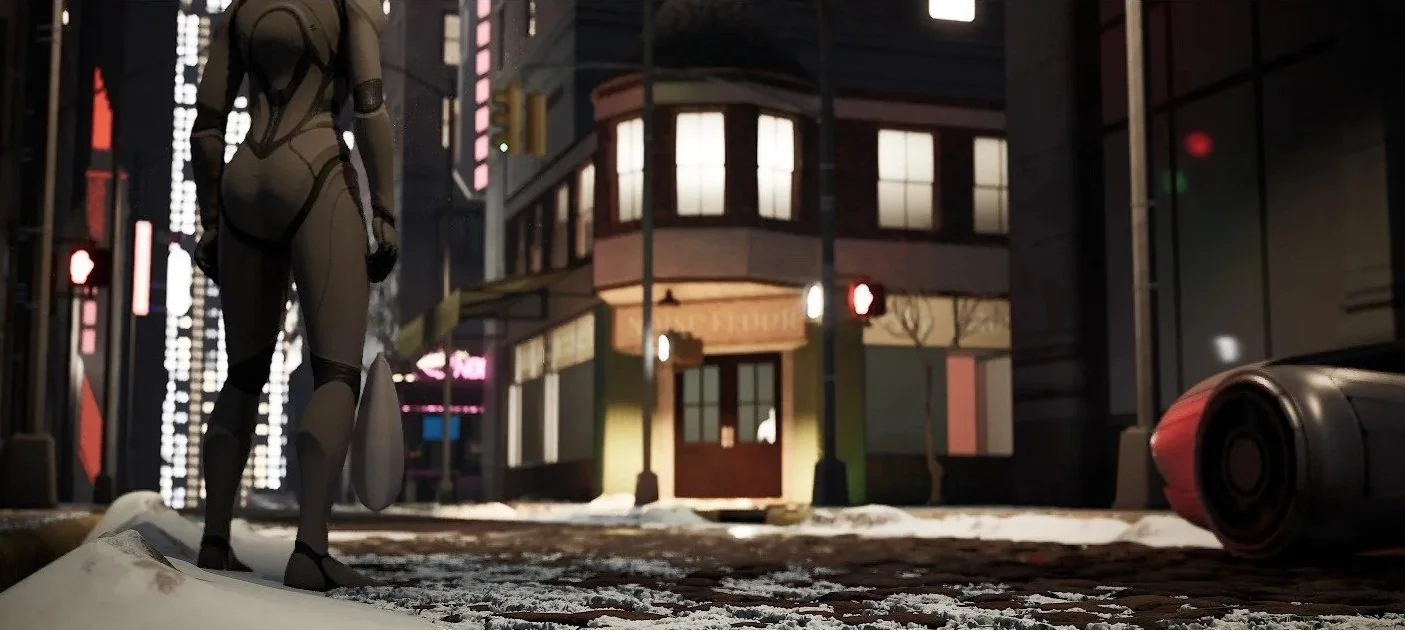
The interior was meticulously art-directed with extensive prop placement and seasonal atmospheric effects, utilizing dynamic snowfall to create a snow globe-type immersion that aligns with the story's Christmas setting.
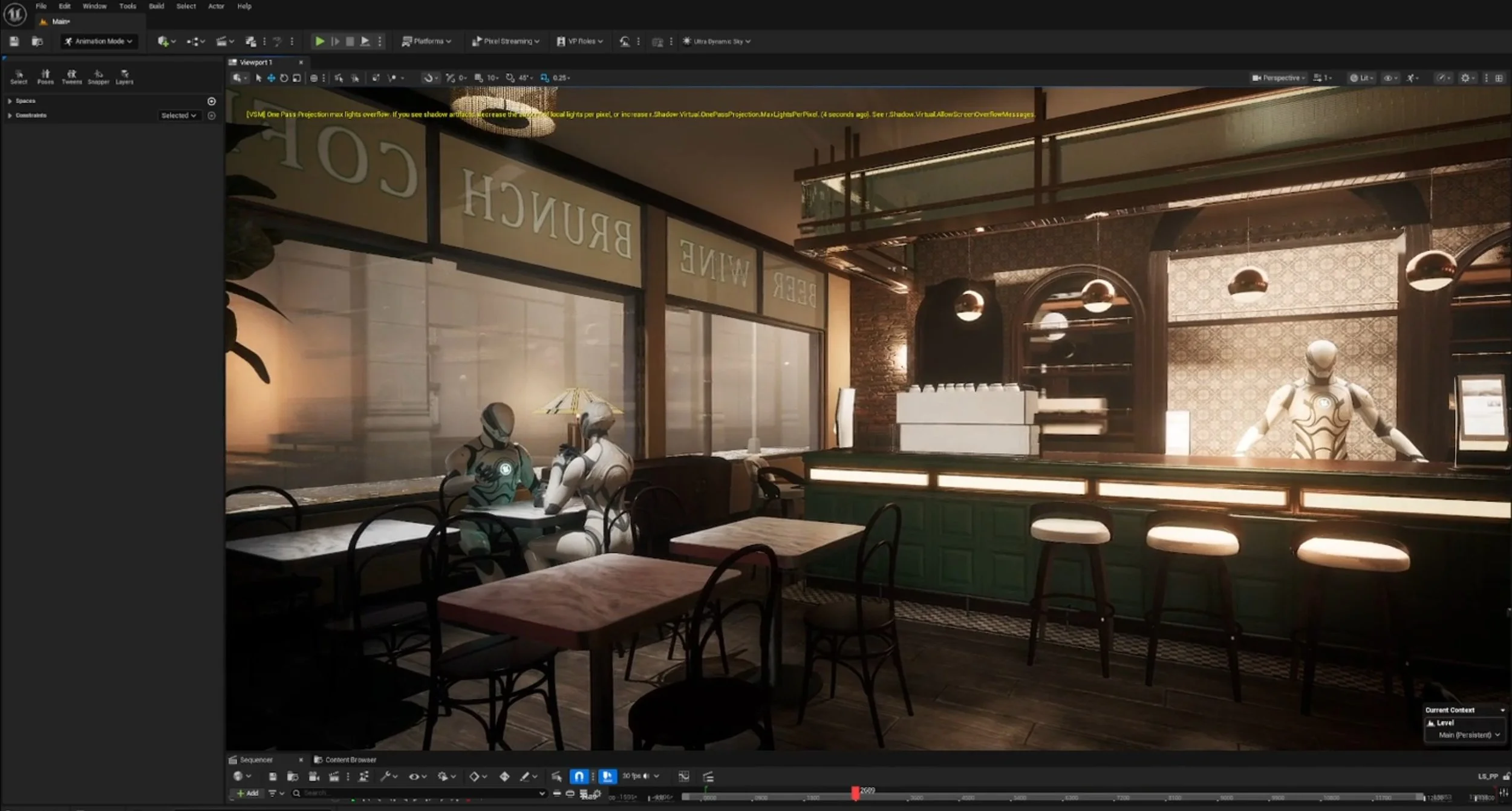
After the cafe was completed, it was imported into Unreal Engine for major blocking, and to make sure the scene was working at the highest level.
Phase 3: Unreal Engine Integration & Technical Strategy
Advanced World-Building with Unreal Engine 5.6
I utilized Unreal Engine 5.6’s latest re-meshing and displacement techniques to create realistic, snow-covered cobblestone streets, populating the surrounding urban environment with a high-fidelity city toolkit for rapid, large-scale world-building.
By combining custom Blender-modeled room dividers with curated assets from FAB and CGTrader, I maintained a high-end interior aesthetic while optimizing the workflow for maximum creative flexibility. To achieve the film's signature snow globe atmosphere, I integrated the Ultra Dynamic Sky blueprint system for real-time weather and lighting control.
I strategically utilized a mix of 2k and 4k materials, prioritizing texture memory where it mattered most, while ensuring the scene met cinematic quality standards.
Stylized Character Production
Phase 4: Character Design & Stylized Post-Processing
Overcoming the Uncanny Valley
I utilized MetaHuman Creator (5.6) to develop custom-rigged characters, migrating legacy assets for enhanced customization to ensure each story beat was grounded in expressive, high-detail performances. By focusing on precision-posed keyframes, I maintained narrative clarity while maximizing the cinematic impact of every "frozen" moment.
To balance the hyper-realism of MetaHumans with our story's artistic themes, I implemented a custom Kuwahara post-process filter. This achieved a painterly, illustrative aesthetic that removed visual distractions and focused the audience's attention on lighting, color, and emotional subtext.
Performance Optimization
By strategically rendering all characters at LOD 2, I significantly optimized scene performance without sacrificing visual quality, as the post-process filter prioritized form and silhouette over unnecessary sub-pixel detail. This ensured a smooth, high-resolution final render that remains consistent across both hero and background elements
Wrap-up
By leveraging virtual production workflows, we achieved a high-end cinematic look that traditionally requires a full animation team. This workflow is now available for commercial previs, music videos, and narrative shorts through Packhowl Media.
Interested in a similar stylized look for your project?